 blog
blog
What to Look for in a Custom Apparel Vendor
Table of Contents
- Understanding Your Custom Apparel Needs and Project Scope
- Screen Printing Quality Standards and Decoration Methods
- Evaluating Custom Apparel Samples Before Full Production
- Custom Apparel Embroidery Turnaround Times Explained
- Assessing Fabric Quality, Durability, and Material Standards
- Communication, Customer Service, and Long-Term Vendor Reliability
- Making Your Final Decision on a Custom Apparel Vendor
- Frequently Asked Questions
Last Updated: September 21, 2026
Understanding Your Custom Apparel Needs and Project Scope
Before you evaluate any custom apparel vendor, define what you actually need. This foundational step determines everything that follows, from which vendors make sense to evaluate, to how you'll measure their performance.
Start by clarifying your project scope. Are you ordering branded uniforms for 50 employees? Custom jerseys for a sports team? Promotional giveaways for a conference? The project type shapes your vendor requirements dramatically. A vendor excellent at high-volume corporate merchandise may struggle with complex embroidery on small orders. Conversely, a shop built for intricate custom work might not have the production capacity for 500 units.
Document your specific requirements: quantity needed, desired decoration method (screen printing versus embroidery), timeline, budget range, and any technical constraints. If you're reordering in the future, consistency across batches becomes critical. A custom apparel vendor should understand this upfront and discuss how they maintain brand consistency on repeat orders.
Screen Printing Quality Standards and Decoration Methods
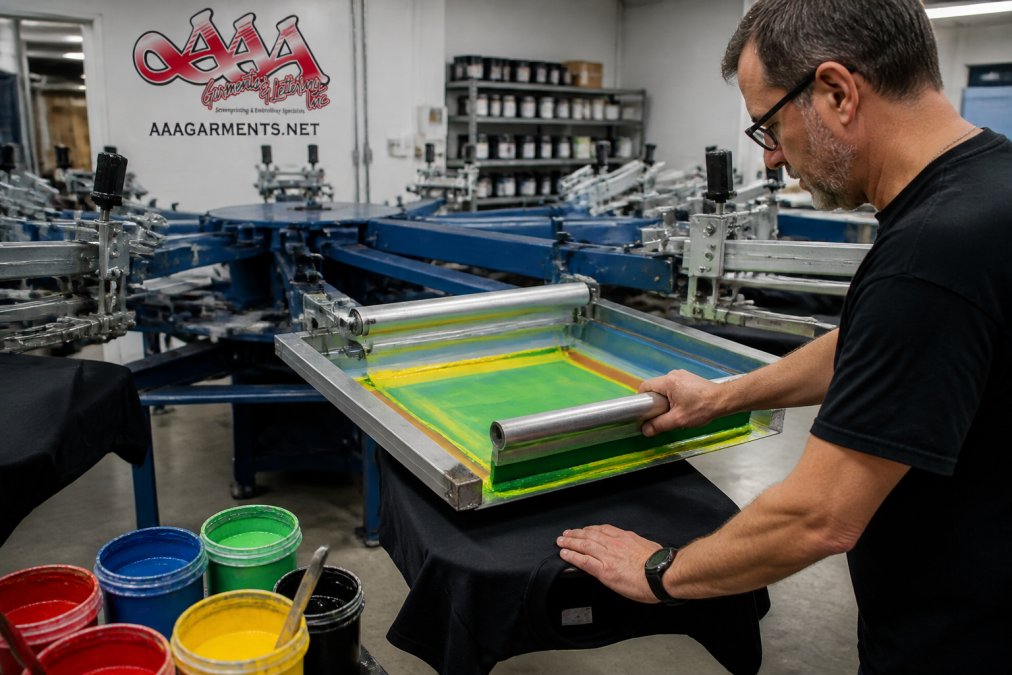
Screen printing delivers vibrant, durable color on apparel at scale. Understanding quality standards helps you spot vendors who cut corners versus those who invest in precision.
Quality screen printing depends on several factors: ink opacity, print placement accuracy, color matching to your specifications, and ink durability through washing. A professional custom apparel vendor controls these variables through equipment calibration, trained operators, and rigorous quality checks.
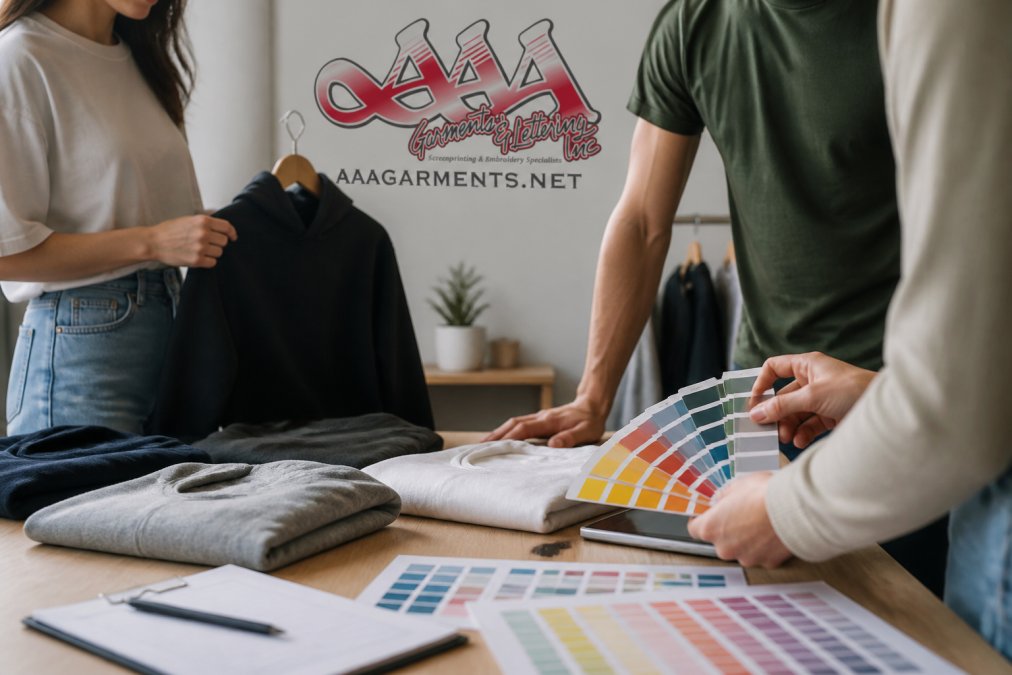
Ask potential vendors about their color matching process. Do they use Pantone color matching to replicate your brand colors accurately? This matters enormously if you've been burned before with colors that shift. A vendor using proper color standards ensures your company yellow stays yellow, not green.
Print placement precision also separates quality vendors from careless ones. Your logo should land in the exact same spot on every garment. Ask how they verify placement, many professional shops use registration marks and digital positioning tools to guarantee consistency.
Ink durability is another critical standard. Quality screen printing inks withstand repeated washing without cracking, fading, or peeling. A vendor should be able to explain their ink chemistry and durability testing. If they can't, that's a red flag.
Embroidery offers a different aesthetic, more textured, premium-feeling than screen printing. Embroidered designs work beautifully on polos, hats, and jackets. The tradeoff: embroidery typically costs more per unit and has slower turnaround times than screen printing.
Evaluating Custom Apparel Samples Before Full Production
Never commit to a large order without approving samples first. This is non-negotiable.
Request samples that match your exact specifications: the garment style, size, color, decoration method, placement, and any special requirements. A legitimate custom apparel vendor welcomes sample requests because they know quality work sells itself.
When samples arrive, inspect them against your original artwork and specifications. Check color accuracy by comparing against your Pantone reference or original design file. Look for print placement consistency, measure the distance from the neckline or seam to ensure placement matches your tech pack.
Examine seam integrity and fabric quality. Feel the weight and drape of the garment. Does the fabric match what you expected? Are stitches even and secure? These details matter because they affect how your brand is perceived when customers receive the apparel.
Ask the vendor about their proof approval process. Can you request digital proofs before production? Can you request physical samples for final sign-off? A responsive vendor provides both and builds in time for revisions.
Custom Apparel Embroidery Turnaround Times Explained
Turnaround time varies dramatically by decoration method and order complexity. Understanding these differences helps you choose the right vendor and set realistic expectations.
Screen Printing Timelines
Screen printing typically offers the fastest turnaround for volume orders. Setup happens once, the vendor creates screens for your design, then production runs continuously across multiple presses. A custom apparel vendor with adequate press capacity can deliver 100-500 units in 7-10 business days. For orders exceeding 1,000 units, many vendors can compress timelines to 5-7 business days if they have dedicated production slots available.
The bottleneck in screen printing isn't the printing itself; it's pre-production. Color separation (breaking your artwork into individual color layers), screen preparation, and ink mixing add 2-3 days before the first garment runs. A vendor who digitizes your artwork in-house moves faster than one who outsources this step.
Embroidery Timelines
Embroidery is slower because each garment receives the full design individually. Simple designs, a small chest logo in one or two thread colors, typically take 5-10 business days for orders under 100 units. Complex designs with multiple thread colors, large coverage areas, or intricate detail work extend timelines to 3-4 weeks, especially for orders exceeding 500 units.
Embroidery setup includes digitization: converting your artwork into a machine-readable file that the embroidery machine can execute. If your source file is low-resolution or poorly formatted, the vendor's digitizer must rebuild it from scratch, adding 3-5 days. Providing clean, high-resolution artwork (vector files preferred) accelerates this phase significantly.
Capacity and Vendor Constraints
A vendor's actual turnaround depends on their current workload. A shop with three embroidery machines can handle more concurrent orders than one with a single machine. Similarly, a screen printing vendor with five presses moves orders faster than one with two. When you contact vendors, ask not just their standard lead time but their current queue depth. A vendor with a two-week backlog cannot deliver in five business days, no matter what they promise.
Expedite options exist but cost more.
Communicating Your Timeline Upfront
Assessing Fabric Quality, Durability, and Material Standards
Fabric quality determines how your apparel performs, how long it lasts, and whether reorders will match your original batch. This is where many vendors cut corners, and where informed buyers catch them.
Understanding Fabric Weight and Construction
Supplier Relationships and Consistency
Inspecting Samples for Defects
When samples arrive, inspect them methodically. Look for:
- Pilling: Small fabric balls that form from friction. Indicates low-quality fabric or poor construction. Quality 200+ GSM fabric resists pilling.
- Loose or uneven stitching: Seams should be straight, tight, and consistent. Loose stitches fail quickly and look unprofessional.
- Seam separation: Hems and side seams should hold firm. Gently tug seams to verify they don't pull apart.
- Color consistency: The garment color should match your specification. If you ordered navy, it should be navy, not purple-tinted or faded.
- Print or embroidery adhesion: If decorated, the design should not peel, crack, or fade under light rubbing. Quality screen printing and embroidery bond permanently to the fabric.
- Shrinkage: Wash and dry the sample per care instructions, then measure it. Acceptable shrinkage is 2-3%; anything beyond that indicates poor fabric or construction.
Post-Production Quality Control
- Inspect every garment before shipment, or only spot-check?
- Test ink durability through wash cycles (industry standard is 20+ home wash cycles)?
- Have a documented defect threshold (e.g., zero tolerance for seam separation, maximum 2% acceptable defect rate)?
- Provide a quality guarantee or warranty if garments fail prematurely?
Care Instructions and Longevity
Communication, Customer Service, and Long-Term Vendor Reliability
A custom apparel vendor is a partner, not a transaction. How they communicate and handle problems reveals whether they'll be reliable for years or just this one order.
Making Your Final Decision on a Custom Apparel Vendor
Evaluate vendors systematically. Create a simple scorecard: decoration method capability, sample quality, communication responsiveness, turnaround time for your timeline, and references from similar clients.
Frequently Asked Questions
What are the key indicators of a high-quality custom apparel vendor?
A reliable custom apparel vendor demonstrates consistent color matching (using Pantone standards), maintains seam integrity on finished garments, provides detailed proofs before production, meets stated lead times, and offers transparent communication throughout the process. Request samples and references from past clients. Ask about their equipment, quality assurance procedures, and how they handle reorders to ensure brand consistency across batches.
How do custom apparel embroidery turnaround times compare to screen printing?
Embroidery typically requires longer lead times than screen printing because each design must be digitized and stitched individually. Screen printing turnaround times explained: designs are prepared once, then applied to multiple garments quickly. Embroidery setup involves digitization fees and stitch-out samples, adding 3-5 business days before production begins. Discuss your timeline upfront and confirm whether your vendor can accommodate rush orders without compromising quality.
What questions should I ask a custom apparel vendor during the quote process?
Ask about minimum order quantities, exact turnaround times, proof approval processes, revision policies, setup fees, reorder procedures, and how they handle color matching across future orders. Inquire about their quality assurance process, fabric weight specifications (GSM), available decoration methods, and what happens if there's a production issue. Request references from businesses similar to yours and ask about their customer service responsiveness during the design phase.
How do I evaluate screen printing quality before placing a large order?
Request a sample print on the exact fabric and color you plan to order. Inspect print placement, color accuracy against your Pantone reference, ink saturation, and edge definition. Check for ink bleeding, cracking, or fading after washing. Ask the vendor about their ink types, curing process, and quality control standards. Review their portfolio for consistency across different orders. A vendor confident in their screen printing quality standards will provide samples without hesitation and stand behind their work.
Choosing the right custom apparel vendor shapes how your brand looks and how your team feels wearing it. The time you invest now in evaluation prevents months of frustration later. Request a quote from AAA Garments & Lettering, Inc. and discuss your specific needs, we'll walk you through our process and show you exactly how we maintain the quality and consistency your organization deserves.